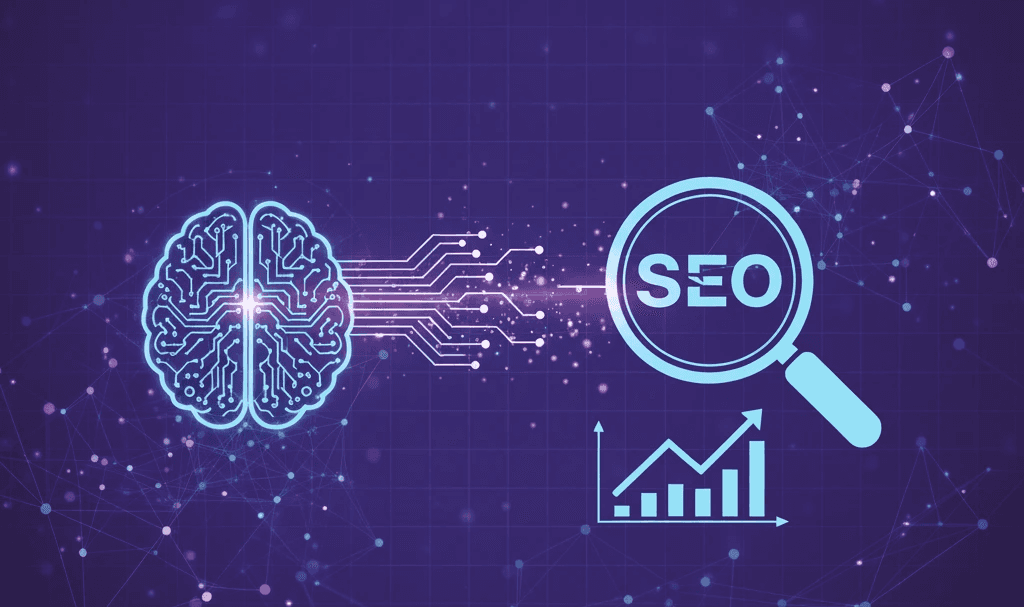
What is AI SEO? 6 Strategies to Increase Brand Visibility in Artificial Intelligence Searches

What is AI SEO? 6 Strategies to Increase Brand Visibility in Artificial Intelligence Searches

What is AI SEO? 6 Strategies to Increase Brand Visibility in Artificial Intelligence Searches

|

|

|

CRO DATA Manager

CRO DATA Manager

CRO DATA Manager

Last Update:

Jan 2, 2026

Jan 2, 2026

Jan 2, 2026

Reading Time:

8 dk

8 dk

8 dk

Search behaviors are undergoing a fundamental transformation. According to Adobe Analytics data, traffic from AI sources to U.S. retail sites increased by 3,500% in May 2025 compared to July 2024. Users are now directing questions like “What is the best CRM software?” or “How to choose an e-commerce infrastructure?” to AI tools such as ChatGPT, Gemini, Claude, and Perplexity.

This change creates a new competitive field for brands: AI Visibility or, as it is known in the literature, Generative Engine Optimization (GEO).

So how can your brand stand out in this new search ecosystem?
According to a study published by Princeton University in 2024, the right GEO strategies can increase visibility by up to 40%. Here’s a data-driven, actionable roadmap.

1. How Do LLMs Choose Brands?

Large language models (LLMs) look at data quality and authority signals rather than advertising budgets when recommending brands. Research shows that these systems evaluate multiple factors in their decision-making process.

Key Selection Criteria

  • Parametric Information: How often and in what contexts the brand appears in the model’s training data

  • Retrieval-Augmented Generation (RAG): In which sources the brand appears during real-time web searches

  • Authority Signals: Consistent mentions in reliable sources (Wikipedia, industry publications, G2, Capterra)

  • Structured Data: The use of Schema.org markup and the content being easily processed by AI

According to an analysis by Semrush on 1 million queries, AI models include the brand name in 26% to 39% of the responses. This rate can significantly increase with the right optimization strategies.

Platform-Based Resource Preferences

Each AI platform has different source preferences. Research by Profound on 30 million citations reveals the following results:

  • ChatGPT: Wikipedia (47.9%), Reddit (11.3%), Forbes (6.8%)

  • Google AI Overviews: Reddit (21.0%), YouTube (18.8%), Quora (14.3%)

  • Perplexity: Reddit (46.7%), YouTube (13.9%), Gartner (7.0%)

2. Aligning Brand Narrative with AI

LLMs struggle to process vague or jargon-filled expressions. General statements like “We offer innovative solutions” remain meaningless for AI systems as they do not specify a concrete category or benefit.

Entity Recognition Optimization

For AI systems to categorize your brand correctly, clear answers to the following questions must be available:

  • What exactly does your brand do?
    (e.g., “Provides payment infrastructure for B2B SaaS companies”)

  • What specific problem does it solve?
    (e.g., “40% cost savings in international payments”)

  • In which category does it want to lead?
    (e.g., “Turkey's fastest integrated payment gateway”)

  • What is its tangible difference from competitors?
    (e.g., “24/7 Turkish technical support and local bank integrations”)

Critical: All your digital assets must consistently convey these messages. Presenting this information in structured data format using Schema.org Organization markup helps Google Knowledge Graph and LLMs understand your brand better.

3. Strengthening Content Areas Targeted by AIs

LLMs scan not only your website but also mentions of the brand across the internet. According to Seer Interactive’s research, likely sources included in the training data are:

High-Priority Sources

  • Wikipedia: Create a sourced page that meets notability criteria

  • Reddit: Contents with 3+ upvotes are included in ChatGPT-4's training data

  • Industry Publications: Bloomberg, TechCrunch, industry magazines, and listicles

  • Review Platforms: Independent review sites like G2, Capterra, Trustpilot

  • YouTube: Indexed through transcripts and metadata

  • Medium and Substack: Long-form, quality content

Website Content Optimization

  • About Us Page: Clear, factual information that can be summarized by AI

  • FAQ Pages: Content structured in Q&A format

  • Product/Service Pages: Specific features, pricing, use cases

  • Blog Content: Educational, data-backed, up-to-date articles

4. Content Strategy for GEO

There are significant differences between traditional SEO and GEO. Princeton's research shows that specific content strategies can significantly enhance visibility.

Effective GEO Tactics

  • Question-Based Titles: “What is X?”, “How to choose X?”, “What are the alternatives to X?”

  • Clear Answer in the First Sentence: Direct and concise answer in the first sentence of each section

  • Statistics and Citations: Research findings and expert opinions

  • Comparison Contents: “X vs Y”, “Top 10 X tools” guides

  • Schema Markup: Use of FAQPage, HowTo, Product schema

Content Format Recommendations

LLMs prefer clear answers and well-structured content. According to Semrush research, 52% of the sources featured in Google AI Overviews also appear in the top 10 results of organic search. This indicates that SEO and GEO complement each other.

5. Building Authority and Trust Signals

AI systems recommend brands that consistently provide authority signals.
According to Netpeak's research, the brands preferred by LLMs generally possess the following features:

Methods for Building Authority

  • Thought Leadership: Sector analyses, trend reports, original research

  • Case Studies: Success stories supported by concrete figures

  • Expert Opinions: Podcasts, webinars, conference participation

  • Digital PR: Regular news and quotes in industry media

  • Third-Party Verification: Awards, certifications, independent reviews

Important: LLMs differentiate between “earned media” and “owned media.” Mentions from third-party sources carry more weight than content on your own website.

6. Continuity and Measurement

GEO is not a one-time project but an ongoing optimization process. LLMs look at the accumulated data over time, and training updates can take months or even years.

Tracking GEO Metrics

  • Share of Voice (SOV): How often your brand is mentioned in target queries

  • Citation Tracking: Which URLs of yours are cited in AI responses

  • Sentiment Analysis: Whether your brand is presented positively or negatively in AI responses

  • LLM Referral Traffic: Monitoring AI-generated traffic in GA4

Tools and Platforms

To track these metrics, tools like Semrush AI Visibility Toolkit, Profound, Peec.ai, and Otterly can be used. Adobe announced its enterprise-level LLM Optimizer product in June 2025.

GEO Roadmap

AI visibility is now recognized as a distinct discipline beyond SEO.
By 2027, LLM channels are expected to create as much business value as traditional search.

Summary Action Plan

  • Understand the decision mechanisms of LLMs (RAG, parametric information, authority signals)

  • Clarify your brand narrative and optimize for entity recognition

  • Establish a presence on platforms scanned by AIs (Reddit, Wikipedia, industry publications)

  • Create well-structured content in a Q&A format

  • Build authority with thought leadership and third-party validation

  • Regularly track SOV, citation, and sentiment metrics

This is no longer a "nice to have"; it is a mandatory strategy for competitive advantage.

Sources:

  • Princeton University – GEO: Generative Engine Optimization (KDD 2024)

  • Adobe Analytics – AI Traffic Growth Report (2025)

  • Semrush – AI Visibility Research

  • Profound – AI Platform Citation Patterns Study

  • Seer Interactive – LLM Training Data Sources

Search behaviors are undergoing a fundamental transformation. According to Adobe Analytics data, traffic from AI sources to U.S. retail sites increased by 3,500% in May 2025 compared to July 2024. Users are now directing questions like “What is the best CRM software?” or “How to choose an e-commerce infrastructure?” to AI tools such as ChatGPT, Gemini, Claude, and Perplexity.

This change creates a new competitive field for brands: AI Visibility or, as it is known in the literature, Generative Engine Optimization (GEO).

So how can your brand stand out in this new search ecosystem?
According to a study published by Princeton University in 2024, the right GEO strategies can increase visibility by up to 40%. Here’s a data-driven, actionable roadmap.

1. How Do LLMs Choose Brands?

Large language models (LLMs) look at data quality and authority signals rather than advertising budgets when recommending brands. Research shows that these systems evaluate multiple factors in their decision-making process.

Key Selection Criteria

  • Parametric Information: How often and in what contexts the brand appears in the model’s training data

  • Retrieval-Augmented Generation (RAG): In which sources the brand appears during real-time web searches

  • Authority Signals: Consistent mentions in reliable sources (Wikipedia, industry publications, G2, Capterra)

  • Structured Data: The use of Schema.org markup and the content being easily processed by AI

According to an analysis by Semrush on 1 million queries, AI models include the brand name in 26% to 39% of the responses. This rate can significantly increase with the right optimization strategies.

Platform-Based Resource Preferences

Each AI platform has different source preferences. Research by Profound on 30 million citations reveals the following results:

  • ChatGPT: Wikipedia (47.9%), Reddit (11.3%), Forbes (6.8%)

  • Google AI Overviews: Reddit (21.0%), YouTube (18.8%), Quora (14.3%)

  • Perplexity: Reddit (46.7%), YouTube (13.9%), Gartner (7.0%)

2. Aligning Brand Narrative with AI

LLMs struggle to process vague or jargon-filled expressions. General statements like “We offer innovative solutions” remain meaningless for AI systems as they do not specify a concrete category or benefit.

Entity Recognition Optimization

For AI systems to categorize your brand correctly, clear answers to the following questions must be available:

  • What exactly does your brand do?
    (e.g., “Provides payment infrastructure for B2B SaaS companies”)

  • What specific problem does it solve?
    (e.g., “40% cost savings in international payments”)

  • In which category does it want to lead?
    (e.g., “Turkey's fastest integrated payment gateway”)

  • What is its tangible difference from competitors?
    (e.g., “24/7 Turkish technical support and local bank integrations”)

Critical: All your digital assets must consistently convey these messages. Presenting this information in structured data format using Schema.org Organization markup helps Google Knowledge Graph and LLMs understand your brand better.

3. Strengthening Content Areas Targeted by AIs

LLMs scan not only your website but also mentions of the brand across the internet. According to Seer Interactive’s research, likely sources included in the training data are:

High-Priority Sources

  • Wikipedia: Create a sourced page that meets notability criteria

  • Reddit: Contents with 3+ upvotes are included in ChatGPT-4's training data

  • Industry Publications: Bloomberg, TechCrunch, industry magazines, and listicles

  • Review Platforms: Independent review sites like G2, Capterra, Trustpilot

  • YouTube: Indexed through transcripts and metadata

  • Medium and Substack: Long-form, quality content

Website Content Optimization

  • About Us Page: Clear, factual information that can be summarized by AI

  • FAQ Pages: Content structured in Q&A format

  • Product/Service Pages: Specific features, pricing, use cases

  • Blog Content: Educational, data-backed, up-to-date articles

4. Content Strategy for GEO

There are significant differences between traditional SEO and GEO. Princeton's research shows that specific content strategies can significantly enhance visibility.

Effective GEO Tactics

  • Question-Based Titles: “What is X?”, “How to choose X?”, “What are the alternatives to X?”

  • Clear Answer in the First Sentence: Direct and concise answer in the first sentence of each section

  • Statistics and Citations: Research findings and expert opinions

  • Comparison Contents: “X vs Y”, “Top 10 X tools” guides

  • Schema Markup: Use of FAQPage, HowTo, Product schema

Content Format Recommendations

LLMs prefer clear answers and well-structured content. According to Semrush research, 52% of the sources featured in Google AI Overviews also appear in the top 10 results of organic search. This indicates that SEO and GEO complement each other.

5. Building Authority and Trust Signals

AI systems recommend brands that consistently provide authority signals.
According to Netpeak's research, the brands preferred by LLMs generally possess the following features:

Methods for Building Authority

  • Thought Leadership: Sector analyses, trend reports, original research

  • Case Studies: Success stories supported by concrete figures

  • Expert Opinions: Podcasts, webinars, conference participation

  • Digital PR: Regular news and quotes in industry media

  • Third-Party Verification: Awards, certifications, independent reviews

Important: LLMs differentiate between “earned media” and “owned media.” Mentions from third-party sources carry more weight than content on your own website.

6. Continuity and Measurement

GEO is not a one-time project but an ongoing optimization process. LLMs look at the accumulated data over time, and training updates can take months or even years.

Tracking GEO Metrics

  • Share of Voice (SOV): How often your brand is mentioned in target queries

  • Citation Tracking: Which URLs of yours are cited in AI responses

  • Sentiment Analysis: Whether your brand is presented positively or negatively in AI responses

  • LLM Referral Traffic: Monitoring AI-generated traffic in GA4

Tools and Platforms

To track these metrics, tools like Semrush AI Visibility Toolkit, Profound, Peec.ai, and Otterly can be used. Adobe announced its enterprise-level LLM Optimizer product in June 2025.

GEO Roadmap

AI visibility is now recognized as a distinct discipline beyond SEO.
By 2027, LLM channels are expected to create as much business value as traditional search.

Summary Action Plan

  • Understand the decision mechanisms of LLMs (RAG, parametric information, authority signals)

  • Clarify your brand narrative and optimize for entity recognition

  • Establish a presence on platforms scanned by AIs (Reddit, Wikipedia, industry publications)

  • Create well-structured content in a Q&A format

  • Build authority with thought leadership and third-party validation

  • Regularly track SOV, citation, and sentiment metrics

This is no longer a "nice to have"; it is a mandatory strategy for competitive advantage.

Sources:

  • Princeton University – GEO: Generative Engine Optimization (KDD 2024)

  • Adobe Analytics – AI Traffic Growth Report (2025)

  • Semrush – AI Visibility Research

  • Profound – AI Platform Citation Patterns Study

  • Seer Interactive – LLM Training Data Sources

Search behaviors are undergoing a fundamental transformation. According to Adobe Analytics data, traffic from AI sources to U.S. retail sites increased by 3,500% in May 2025 compared to July 2024. Users are now directing questions like “What is the best CRM software?” or “How to choose an e-commerce infrastructure?” to AI tools such as ChatGPT, Gemini, Claude, and Perplexity.

This change creates a new competitive field for brands: AI Visibility or, as it is known in the literature, Generative Engine Optimization (GEO).

So how can your brand stand out in this new search ecosystem?
According to a study published by Princeton University in 2024, the right GEO strategies can increase visibility by up to 40%. Here’s a data-driven, actionable roadmap.

1. How Do LLMs Choose Brands?

Large language models (LLMs) look at data quality and authority signals rather than advertising budgets when recommending brands. Research shows that these systems evaluate multiple factors in their decision-making process.

Key Selection Criteria

  • Parametric Information: How often and in what contexts the brand appears in the model’s training data

  • Retrieval-Augmented Generation (RAG): In which sources the brand appears during real-time web searches

  • Authority Signals: Consistent mentions in reliable sources (Wikipedia, industry publications, G2, Capterra)

  • Structured Data: The use of Schema.org markup and the content being easily processed by AI

According to an analysis by Semrush on 1 million queries, AI models include the brand name in 26% to 39% of the responses. This rate can significantly increase with the right optimization strategies.

Platform-Based Resource Preferences

Each AI platform has different source preferences. Research by Profound on 30 million citations reveals the following results:

  • ChatGPT: Wikipedia (47.9%), Reddit (11.3%), Forbes (6.8%)

  • Google AI Overviews: Reddit (21.0%), YouTube (18.8%), Quora (14.3%)

  • Perplexity: Reddit (46.7%), YouTube (13.9%), Gartner (7.0%)

2. Aligning Brand Narrative with AI

LLMs struggle to process vague or jargon-filled expressions. General statements like “We offer innovative solutions” remain meaningless for AI systems as they do not specify a concrete category or benefit.

Entity Recognition Optimization

For AI systems to categorize your brand correctly, clear answers to the following questions must be available:

  • What exactly does your brand do?
    (e.g., “Provides payment infrastructure for B2B SaaS companies”)

  • What specific problem does it solve?
    (e.g., “40% cost savings in international payments”)

  • In which category does it want to lead?
    (e.g., “Turkey's fastest integrated payment gateway”)

  • What is its tangible difference from competitors?
    (e.g., “24/7 Turkish technical support and local bank integrations”)

Critical: All your digital assets must consistently convey these messages. Presenting this information in structured data format using Schema.org Organization markup helps Google Knowledge Graph and LLMs understand your brand better.

3. Strengthening Content Areas Targeted by AIs

LLMs scan not only your website but also mentions of the brand across the internet. According to Seer Interactive’s research, likely sources included in the training data are:

High-Priority Sources

  • Wikipedia: Create a sourced page that meets notability criteria

  • Reddit: Contents with 3+ upvotes are included in ChatGPT-4's training data

  • Industry Publications: Bloomberg, TechCrunch, industry magazines, and listicles

  • Review Platforms: Independent review sites like G2, Capterra, Trustpilot

  • YouTube: Indexed through transcripts and metadata

  • Medium and Substack: Long-form, quality content

Website Content Optimization

  • About Us Page: Clear, factual information that can be summarized by AI

  • FAQ Pages: Content structured in Q&A format

  • Product/Service Pages: Specific features, pricing, use cases

  • Blog Content: Educational, data-backed, up-to-date articles

4. Content Strategy for GEO

There are significant differences between traditional SEO and GEO. Princeton's research shows that specific content strategies can significantly enhance visibility.

Effective GEO Tactics

  • Question-Based Titles: “What is X?”, “How to choose X?”, “What are the alternatives to X?”

  • Clear Answer in the First Sentence: Direct and concise answer in the first sentence of each section

  • Statistics and Citations: Research findings and expert opinions

  • Comparison Contents: “X vs Y”, “Top 10 X tools” guides

  • Schema Markup: Use of FAQPage, HowTo, Product schema

Content Format Recommendations

LLMs prefer clear answers and well-structured content. According to Semrush research, 52% of the sources featured in Google AI Overviews also appear in the top 10 results of organic search. This indicates that SEO and GEO complement each other.

5. Building Authority and Trust Signals

AI systems recommend brands that consistently provide authority signals.
According to Netpeak's research, the brands preferred by LLMs generally possess the following features:

Methods for Building Authority

  • Thought Leadership: Sector analyses, trend reports, original research

  • Case Studies: Success stories supported by concrete figures

  • Expert Opinions: Podcasts, webinars, conference participation

  • Digital PR: Regular news and quotes in industry media

  • Third-Party Verification: Awards, certifications, independent reviews

Important: LLMs differentiate between “earned media” and “owned media.” Mentions from third-party sources carry more weight than content on your own website.

6. Continuity and Measurement

GEO is not a one-time project but an ongoing optimization process. LLMs look at the accumulated data over time, and training updates can take months or even years.

Tracking GEO Metrics

  • Share of Voice (SOV): How often your brand is mentioned in target queries

  • Citation Tracking: Which URLs of yours are cited in AI responses

  • Sentiment Analysis: Whether your brand is presented positively or negatively in AI responses

  • LLM Referral Traffic: Monitoring AI-generated traffic in GA4

Tools and Platforms

To track these metrics, tools like Semrush AI Visibility Toolkit, Profound, Peec.ai, and Otterly can be used. Adobe announced its enterprise-level LLM Optimizer product in June 2025.

GEO Roadmap

AI visibility is now recognized as a distinct discipline beyond SEO.
By 2027, LLM channels are expected to create as much business value as traditional search.

Summary Action Plan

  • Understand the decision mechanisms of LLMs (RAG, parametric information, authority signals)

  • Clarify your brand narrative and optimize for entity recognition

  • Establish a presence on platforms scanned by AIs (Reddit, Wikipedia, industry publications)

  • Create well-structured content in a Q&A format

  • Build authority with thought leadership and third-party validation

  • Regularly track SOV, citation, and sentiment metrics

This is no longer a "nice to have"; it is a mandatory strategy for competitive advantage.

Sources:

  • Princeton University – GEO: Generative Engine Optimization (KDD 2024)

  • Adobe Analytics – AI Traffic Growth Report (2025)

  • Semrush – AI Visibility Research

  • Profound – AI Platform Citation Patterns Study

  • Seer Interactive – LLM Training Data Sources

Shape Image
Shape Image
Shape Image
Shape Image

Join Our E-Newsletter

Join our subscription list to receive the latest news, updates, and exclusive insights directly in your inbox!

Join Our E-Newsletter

Join our subscription list to receive the latest news, updates, and exclusive insights directly in your inbox!

Join Our E-Newsletter

Join our subscription list to receive the latest news, updates, and exclusive insights directly in your inbox!