
Understanding User Behavior Better with Usability Tests
Understanding User Behavior Better with Usability Tests
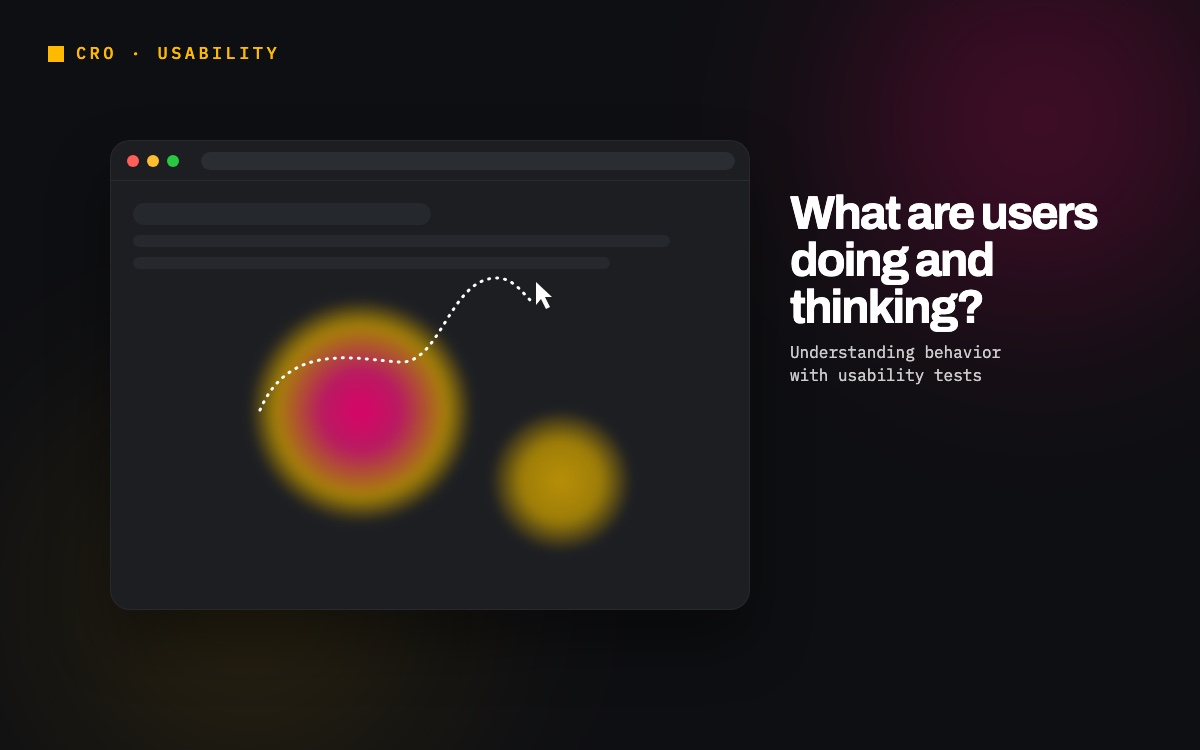
When we talk about performance in the digital world, we usually focus on metrics: conversion rate, add-to-cart rate, bounce rate, average session duration… But behind these numbers there is always a reality that isn’t visible: the user experience.
Why does a user leave without adding a product to the cart? Why can’t they find what they’re looking for even after using filters? Why do they get as far as checkout and not complete it?
The answers to these questions are often hidden not only in analytics tools but in the behavior of real users. This is exactly where usability tests come in.
What is a Usability Test?
A usability test is the process of having real users test a website or digital product within specific scenarios. The aim is to observe where users struggle, get confused or abandon the process while completing tasks.
Users don’t always say clearly what problem they are having. But their behavior sends strong signals.
For example:
- Clicking the same area again and again
- Opening and closing filters
- Focusing on closing pop-ups
- Adding to cart and then going back
These behaviors are early warning signs that appear before the numbers do.
Why Isn’t Analytics Alone Enough?
Analytics tools tell us “what happened”. Usability tests help us understand “why it happened”.
A page may have a high abandonment rate. But the reason could be many different factors, such as:
- Information not being clear enough
- Distracting elements on the page
- The user finding it hard to move forward.
That is why usability tests are one of the most important sources of qualitative insight feeding CRO work.
Experience Points That Stand Out in Usability Tests
Rather than big problems, usability tests often reveal small but significant points of friction in the user journey.
For example, some tests show users being met by several banners and pop-ups on entering the site and focusing on closing these windows before they start shopping. Well-designed pop-ups can add value, but when their volume and timing are not planned well, they can interrupt the experience.
Similarly, filtering areas can present some difficulties. Filters that aren’t clearly visible on mobile, buttons placed too close together or missing critical filters can lead users to give up on filtering altogether. This can lengthen product discovery.
At the cart stage, cross-sell areas in particular are not always clearly understood by users. In some usability tests we have seen, users perceived this area as an ad-like element unrelated to their main task. In some scenarios, users’ attention can also wander because the relationship between the recommended products and the product in the cart isn’t clear enough.
Insights like these show that in-cart recommendations need to fit their context, and they also make the value of usability tests very clear.
How Do Usability Tests Contribute to the CRO Process?
Usability tests usually produce many small insights rather than big breakthroughs.
These insights guide you in deciding:
- Which areas to prioritize
- Which assumptions need to be tested
- Which design decisions should be revisited.
Successful CRO work is often built by stacking these small insights one on top of another.
How to Get Started with Usability Tests
You don’t need complex infrastructure to run a usability test.
Essentially:
- Set a clear goal
- Choose participants that match your real user profile
- Create scenario-based tasks
- Observe behavior
- Prioritise the findings and turn them into action
The most critical point is not to see testing as a one-off exercise. User experience is dynamic; it needs to be re-evaluated at regular intervals.
Conversion Is Not a Side Effect of Design
Conversion rate is often the natural result of a well-designed experience. As the areas that frustrate users, hold them up or create uncertainty are removed, positive movement can be seen in performance metrics too.
Usability tests remind brands of this:
Users know what they want to do on your site. The question is how many obstacles you put in their way.
That is why an approach that looks at data and user observation together creates a healthier and more sustainable foundation for growth.
Let’s talk about this for your brand.
Write to us →