
A New Era in Ad Measurement: The Difference Between Standard Attribution and Incremental Attribution
Ad platforms now offer two different attribution approaches: Standard Attribution and Incremental Attribution.
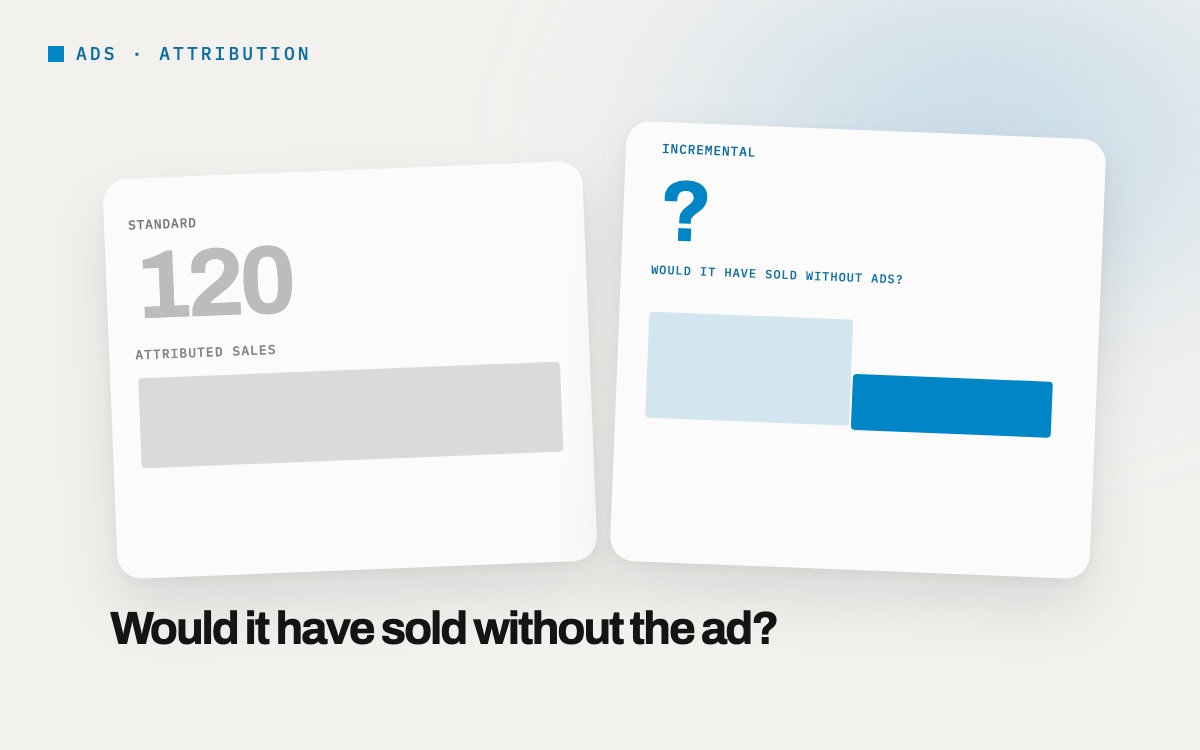
From the outside, the idea of a “conversion” in digital advertising looks very clear: a user sees an ad, clicks, makes a purchase and a conversion happens…
If only the whole process were really that simple.
Today, users come across dozens of touchpoints on their path to purchase. Some happen entirely organically, some are triggered by ads, and some users may not convert despite seeing an ad. To interpret this complex process correctly, ad platforms now offer two different attribution approaches:
Standard Attribution and Incremental Attribution.
Since both approaches directly determine how conversions are counted, they have become one of the cornerstones of advertising strategy.
Why Does the Attribution Model Matter?
Whether or not an ad triggers a conversion, when the wrong attribution model is chosen:
- Some campaigns look more successful than they are,
- Some valuable campaigns are thought to be less successful than they are,
- Budget is directed to the wrong place,
- The quality of optimization drops.
In short, an ad’s fate depends on understanding how the attribution model works.
Standard Attribution Model
Standard Attribution is the traditional attribution method that evaluates user behavior within a set time window.
Its logic is very clear: If a user interacted with an ad and converted within the chosen time window, the conversion is assigned to that ad. What matters here is the pair of “time” and “interaction”.
Where Is It Strong?
- It produces more stable results in newly set-up ad accounts.
- Conversions show up quickly in retargeting campaigns.
- It offers balanced reporting in scenarios with high click volumes.
- It provides practical solutions when fast optimization is needed.
Where Does It Struggle?
- It tends to credit ads with conversions that could have happened without them.
- It struggles to separate organic effects from the ad’s effect.
- In large-scale campaigns, it can create “unreal” shares of conversions.
- The core character of Standard Attribution is this:
- If something happened and it fits the time window, it credits the ad.
Incremental Attribution Model
Incremental Attribution does not evaluate user behavior based on time alone.
What it really focuses on is this: “Did this conversion really happen because of the ad, or would it have happened anyway?”
To find out, it uses advanced behavioral modeling. By comparing users’ natural tendencies, their previous activity and whether or not they were exposed to the ad, it measures how much the conversion was influenced by the ad.
In other words, Incremental Attribution tries to find the real “added value”.
Strengths
- It cleans up inflated conversion numbers.
- It clarifies where the ad really adds value.
- It makes the real impact visible in cold-audience campaigns.
- It moves budget away from unnecessary campaigns towards those that truly create value.
- It enables more accurate strategic decisions in high-volume ad accounts.
Challenges
- Data may look “lower” in the short term (it is actually more realistic).
- The contribution of retargeting campaigns may come out low, because these users are already inclined to convert.
- In accounts with low data volume, the model takes time to mature.
Standard Attribution vs Incremental Attribution: Which Should You Use, and When?
Each model serves a different purpose and delivers excellent results when used in the right scenario.
The Attribution Model Is the Most Critical Step in Measuring Performance
Today, advertising success can no longer be measured by clicks or views alone. Understanding whether an ad makes a real difference to user behavior has become a new-generation approach. Standard Attribution offers a fast, easy and classic evaluation. Incremental Attribution, on the other hand, is more realistic, more precise and focused on long-term optimization.
The model you choose largely determines how your budget works, which campaigns are scaled and which are paused. The right attribution model = the right advertising strategy.
Let’s talk about this for your brand.
Write to us →